
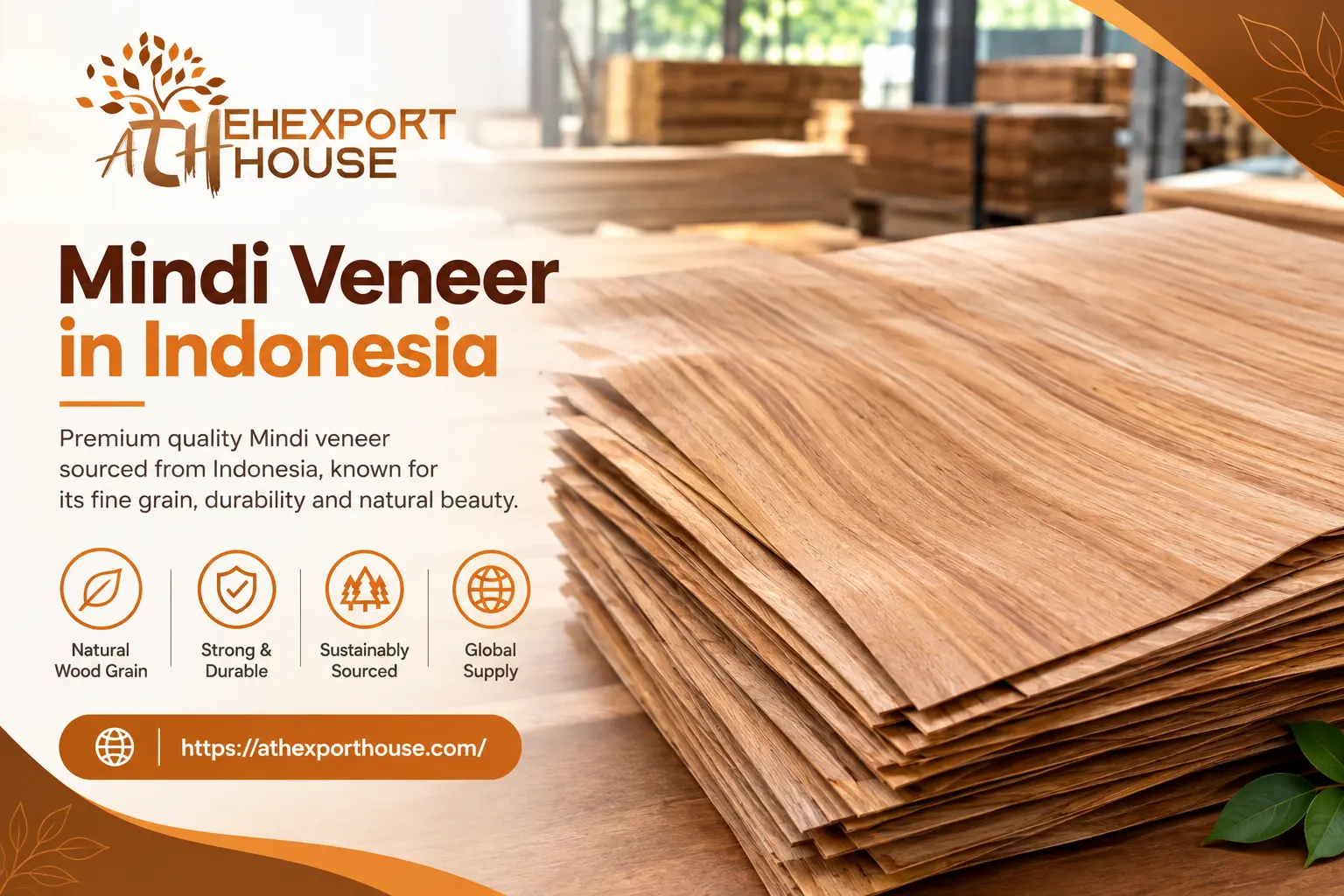
Indonesia is well known for its wood-processing industry and wide range of veneer products. For furniture makers, interior designers, plywood manufacturers, and timber businesses, choosing the right veneer is important for achieving a good finish and long-lasting results. Mindi veneer in indonesia is widely considered for furniture and interior applications because of its natural appearance, workable surface, and attractive wood grain.
Understanding Mindi Veneer for Furniture and Interiors
Mindi wood has a light, clean appearance with a natural grain pattern that works well with different furniture styles. It can be used for cabinets, doors, wall panels, tables, wardrobes, and decorative interior surfaces. Buyers looking for Best quality Mindi veneer should pay attention to veneer thickness, moisture level, grain consistency, surface condition, and proper drying. These factors can make a significant difference in the final appearance and performance of the finished product.
Why Indonesian Veneer Products Are in Demand
Indonesia has an established timber and wood-processing sector with manufacturers and traders supplying veneer products to different markets. Local processing facilities can offer different veneer specifications depending on the requirements of furniture manufacturers and plywood producers. Along with Mindi, buyers can also find Meranti, Gurjan, Keruing, and other wood veneer varieties. This range allows businesses to select materials according to their project requirements, design preferences, and production needs.
Meranti Face Veneer for Plywood Production
Meranti is another commonly used timber species in the regional wood industry. Meranti face veneer Indonesia products can be suitable for plywood manufacturing, furniture panels, and other applications where a clean and attractive surface is required. The quality of face veneer depends on factors such as log selection, peeling or slicing methods, drying, grading, and storage. Buyers should discuss their required size, thickness, grade, and finish with the supplier before placing a bulk order.
Finding Reliable Gurjan Veneer Traders
Gurjan veneer is valued for applications where strength, appearance, and suitable panel performance are important. Businesses searching for gurjan face traders in Indonesia should check the supplier’s product specifications, available grades, production capacity, and quality-control process. It is also useful to request samples before making a larger purchase. Comparing samples can help buyers understand the actual grain, color, thickness, and surface quality rather than relying only on photographs or product descriptions.
Keruing Veneer Manufacturing in Indonesia
Keruing is another timber used in the Southeast Asian wood industry. keruing veneer factory in Indonesia suppliers may provide veneer for plywood, furniture, interior panels, and other wood-based products. Buyers should confirm whether the factory can meet their required dimensions, thickness tolerances, packaging standards, and shipping requirements. Proper handling and storage are also important because veneer can be affected by moisture and unsuitable storage conditions.
Choosing the Right Indonesian Veneer Supplier
When selecting a veneer supplier, businesses should consider more than price. Product consistency, grading standards, production capacity, packaging, communication, and delivery arrangements are all important. A dependable supplier should clearly explain the available veneer specifications and provide relevant product information. For regular orders, buyers can also discuss customized thicknesses, sheet sizes, matching requirements, and packaging preferences according to their manufacturing process.
About ATEX Export House
ATEX Export House works with wood veneer products and supports buyers looking for suitable veneer solutions from Indonesia. Whether the requirement is for furniture production, plywood manufacturing, or interior applications, understanding the product specification before purchasing can help avoid quality and supply issues. Buyers can discuss their requirements, request product details, and evaluate suitable veneer options based on their project needs.
FAQs
- What is Mindi veneer commonly used for?
Mindi veneer is commonly used for furniture, cabinets, wardrobes, doors, wall panels, decorative surfaces, and other interior applications. Its natural grain and light appearance make it suitable for modern and traditional furniture designs. The veneer can be finished with different stains, coatings, or clear finishes depending on the desired appearance. Before purchasing, manufacturers should check the veneer thickness, moisture content, grading, and surface condition to make sure it matches their production requirements.
- How can buyers check veneer quality before ordering?
Buyers can request physical samples before confirming a large order. The sample should be checked for thickness consistency, grain appearance, color variation, cracks, splits, patches, and surface defects. Moisture content and drying quality are also important. Businesses should also ask the supplier about grading standards, production methods, packaging, and available specifications. For regular or large-volume orders, agreeing on quality requirements in advance can help maintain consistency between different shipments.
- Can Indonesian veneer be used for plywood manufacturing?
Yes, various Indonesian veneer products can be used for plywood and other engineered wood products, depending on their grade, thickness, species, and intended application. Face veneer is generally selected for the visible surface, while other veneer grades may be used for core or back layers. Manufacturers should confirm the technical specifications and bonding requirements with their plywood production team and supplier before ordering commercial quantities.
- What should I ask an Indonesian veneer supplier?
A buyer should ask about wood species, veneer thickness, sheet dimensions, available grades, moisture content, surface quality, production capacity, packaging, minimum order quantity, and delivery arrangements. It is also helpful to request product photographs and physical samples. If the veneer is being purchased for export, buyers should clarify documentation and shipping requirements in advance. Clear specifications help both sides understand the expected product quality before an order is finalized.
- Why is supplier selection important when buying veneer?
Supplier selection is important because veneer quality can vary according to raw material selection, processing, drying, grading, and storage. A reliable supplier should be able to provide clear product specifications and consistent material for repeat orders. Buyers should compare samples, specifications, pricing, lead times, and communication before making a decision. For long-term furniture or plywood production, consistent veneer quality can help maintain the appearance and production standards of the finished products.
